Pechvarry
Pechvarry is a boatmaker who lives on the next islet eastward from Ged's house in Low Torning, a township of the Ninety Isles. He is a craftsman who takes pride in his work, and his first encounter with Ged is marked by a characteristic grin and a self-deprecating remark about his month's labor on a little catboat. Ged, who has been learning the value of plain sailing and honest work, offers to lay a binding-spell on the boat to keep her sound and a finding-spell to help bring her home from the sea. Pechvarry's face shines at the offer, and he climbs up onto the jetty to take Ged's hand and thank him then and there, establishing a bond that transcends the usual awe the islanders feel for their scarred, silent wizard.
Friendship and Shared Craft
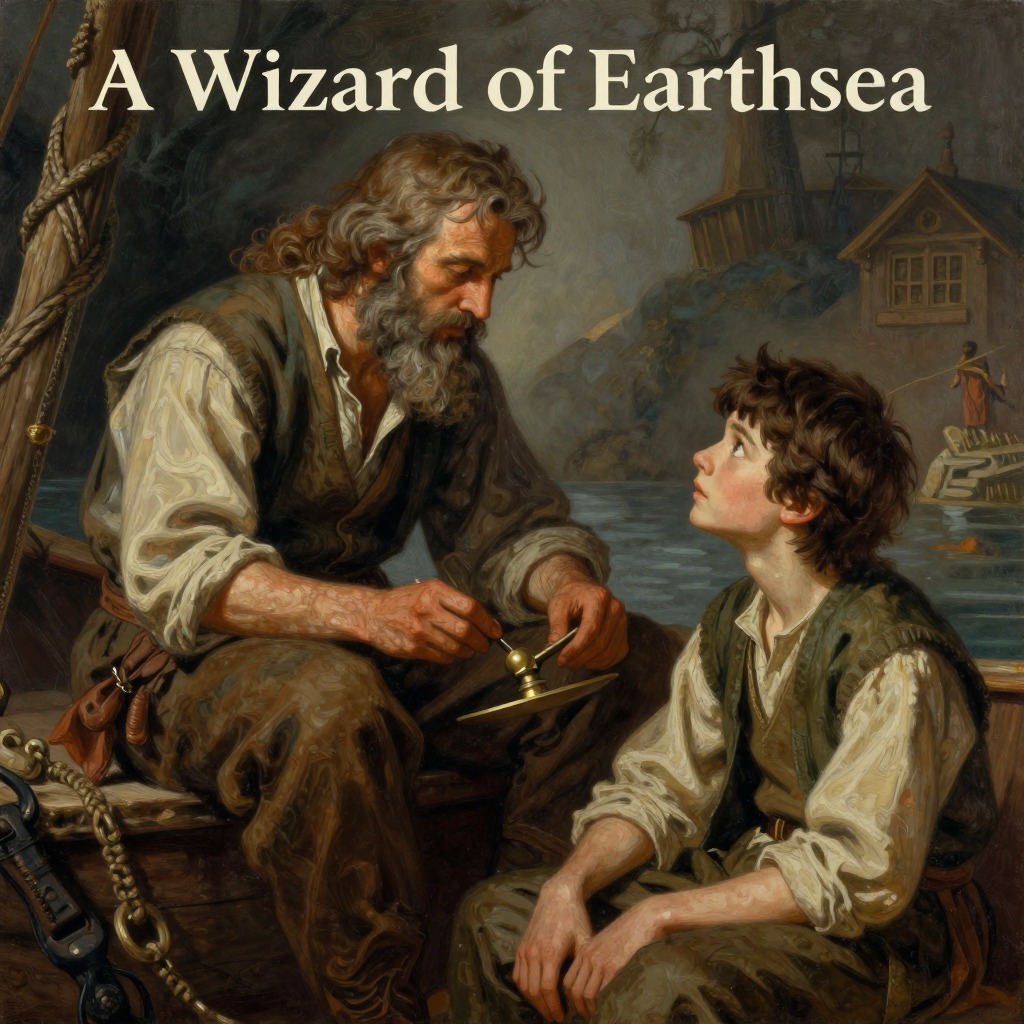
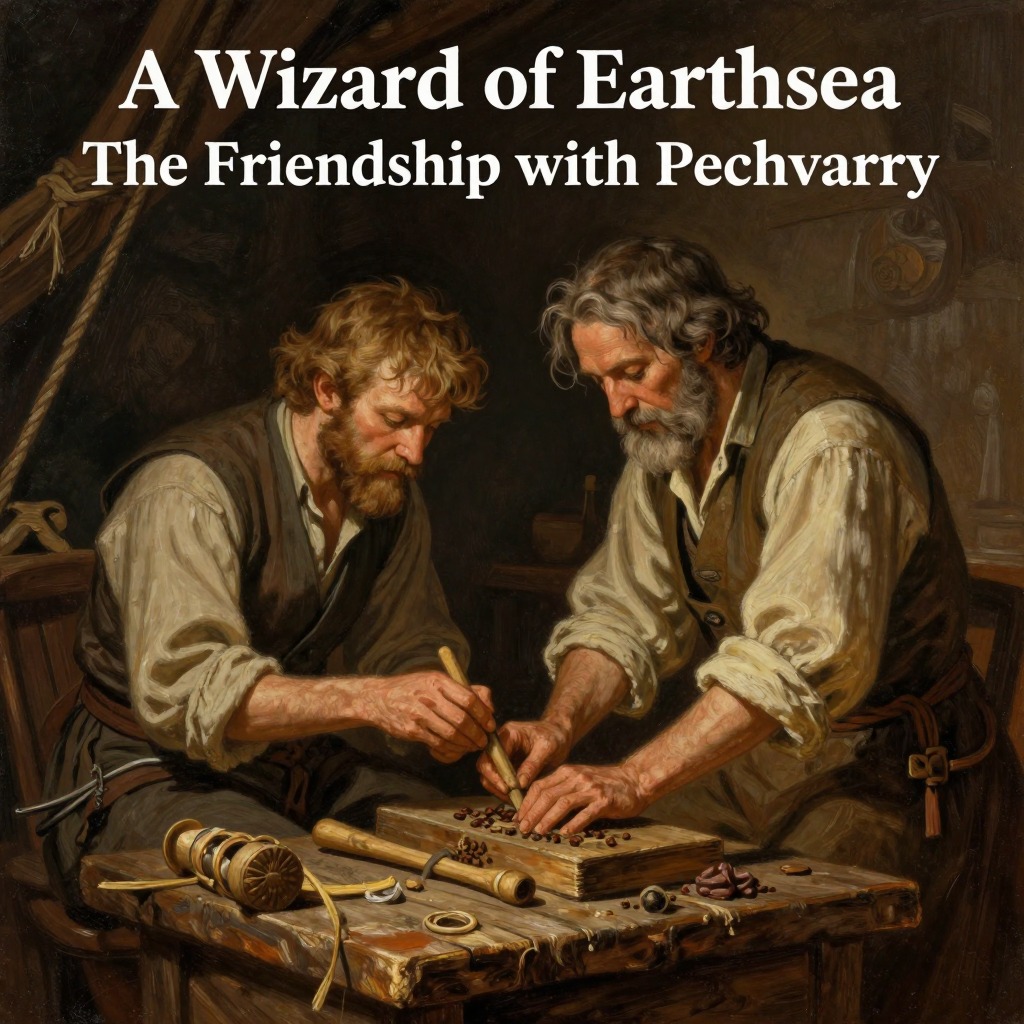
After that first meeting, Ged and Pechvarry come to work together often. Ged interweaves his spellcrafts with Pechvarry's handwork on the boats he builds or repairs, and in return learns from Pechvarry how a boat is built and how it is handled without the aid of magic—a skill that had been somewhat scanted on Roke. Often the two men, along with Pechvarry's little son Ioeth, go out into the channels and lagoons of the Ninety Isles, sailing or rowing one boat or another, until Ged becomes a fair sailor. The friendship between them becomes a settled thing, a rare warmth in Ged's life after the disaster on Roke Knoll and the long, bitter months of recovery.
The Healing Attempt and Its Aftermath
Along in late autumn, Ioeth falls sick with the red-fever. The local witchwoman does what she can, but the child is dying. Pechvarry comes hammering at Ged's door in the middle of a stormy night, begging him to come save the child. Ged sees that the child is dying and draws back, remembering the Master Herbal's first and last lesson: heal the wound and cure the illness, but let the dying spirit go. But when Pechvarry's wife cries out in despair and Pechvarry himself says, "The Lord Sparrowhawk will save him, wife. No need to cry! He's here now. He can do it," Ged cannot bear to disappoint their trust. He attempts to save Ioeth by sending his spirit out after the child's spirit, pursuing him across the boundary wall into the dry land of the dead. There he finds the shadow waiting for him, and only the otak's patient licking of his face calls him back to life. He returns to find Ioeth dead and Pechvarry utterly bewildered, believing the wizard also dead. The grief for his friend is a wound that stays with Ged.
Change and Ending
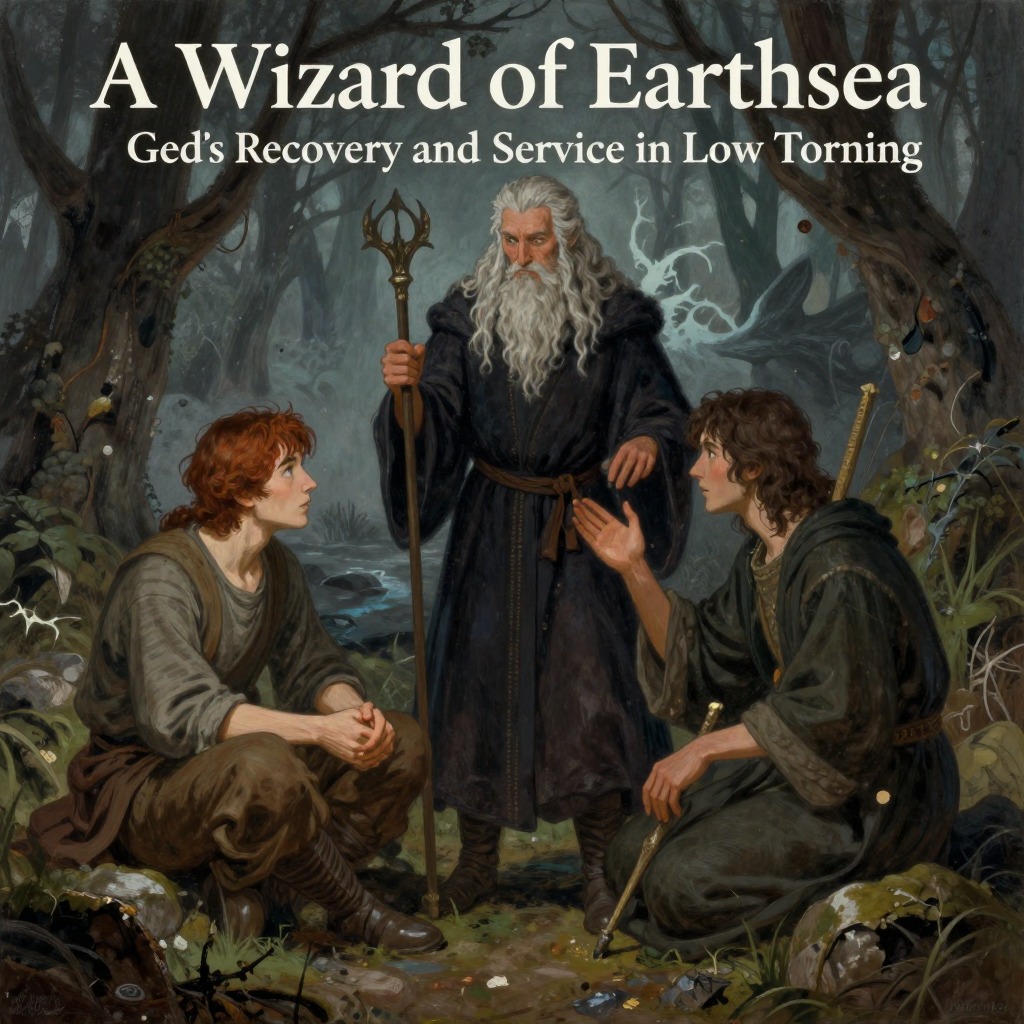
After Ged returns from Pendor, having defeated the dragons and bound Yevaud by his oath, Pechvarry meets him again. He says, "I did not know you were so mighty, my lord." There is fear in that because he had dared make Ged his friend, but there is reproach in it also: Ged had not saved a little child, though he had slain dragons. This moment crystallizes Ged's unease and drives him from Low Torning. Pechvarry is one of those who, when Ged announces his intention to go to Pendor, holds that the young wizard has gone mad and seeks death. He does not appear again in the narrative, but his son's death and the shadow's appearance at the boundary wall remain a turning point in Ged's quest, forcing him to realize that he cannot run from what he has loosed.
Thematic Significance
Pechvarry represents the ordinary, decent human life that Ged might have lived had he not been driven by pride and the pursuit of power. Their friendship is built on honest work and mutual respect, a counterpoint to the rivalries and ambitions of the School for Wizards. The tragedy of Ioeth's death and Ged's failure to save him underscores the central theme of the novel: that a wizard's power must follow knowledge and serve need, and that even the greatest power cannot undo death. Pechvarry's reproach—that Ged could slay dragons but not save a child—haunts Ged and deepens his understanding of the limits and responsibilities of his art.